







A warehouse supervisor in Lagos spent about 90 minutes on her phone typing eight years of shift-lead work into a "free resume builder." She tapped Download PDF. The page asked her to pay. The role she wanted closed that same week.
I keep coming back to that sitting because it is so ordinary. People aren't hunting a trial. They want a file they can attach tonight — no account, no card, no catch after the hard part is done. A free resume builder that fails at the last tap is not a tool. It is a delay dressed as help.
The download wall most people hit
You can usually type the whole resume, pick a template, even preview a polished page. Then the export button stops being a button and becomes a checkout.

Zety and Resume.io commonly let you build for free, then charge to download a usable PDF. Paywall-at-export, or a trial that turns into a subscription. Your hour of work sits in their product. The file you can actually send is locked until you pay.
If you filled that form after a long shift, of course you don't have another hour to fight a checkout page. The work is done. The file still isn't yours. That gap is the insult, not the existence of paid software.
Canva is a different kind of almost-free. It often does let you export without paying. The problem shows up later: many decorative templates look sharp on a phone and parse poorly in applicant tracking systems (ATS) — the software a lot of employers run before a human opens the file. Two-column layouts, icons in place of headings, and text inside graphics can scramble the reading order. A line like "reduced picking errors on the night shift" can vanish into a sidebar the parser never sees.
A builder that is free until download is not a free resume builder. It is a sales funnel with a resume form on top.
What a free resume builder has to include
If "free" is going to mean anything, the product has to clear a short practical list.
You should not need an account, an email, or an onboarding quiz before you can type your name. If you have to create a login first, you're already in a funnel. A resume builder with no sign up is the first real test.
There should be no trial, no freemium, no paywall at export. Unlimited CVs and unlimited PDF downloads. The page you preview has to be the page you get.
Your data should stay on your computer. If it never leaves the device, a company can't see it, sell it, or lose it in a breach.
You also need a live preview, so you aren't guessing. You need ATS-friendly templates with clean semantic structure: headings that are actually headings, not text boxes floating in a collage. And you need more than one CV at a time — a startup version next to a corporate one — without paying per file.
Simple CV is built around that list. The interface is English-only today. The product stays free through ads and donations. CV content is never used to target those ads and never sold. For the longer tradeoffs, see this comparison of free vs paid builders.
Features you can use today (no catch)
Here is what you get on Simple CV without paying.
Personal info, work, education, skills, projects, languages, certifications, and references. Drag sections to reorder them. Show or hide a section when a job doesn't need it — hide references for an online form that never asks; show them when a posting does.
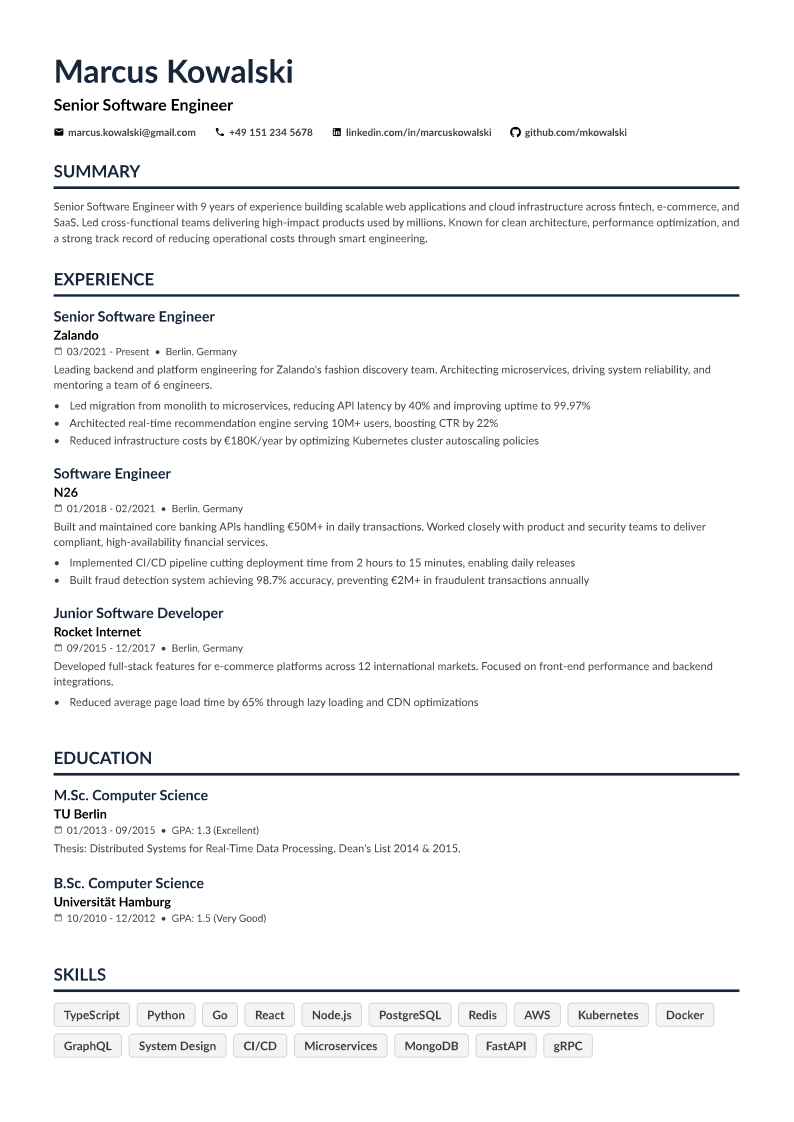
Eight free resume templates. Not eight locked previews with one usable layout. All eight are available, ATS-friendly, with clean structure. Clean Canvas is the one I would start with if a portal is going to read the file first.
Unlimited CVs side by side. Applying for a warehouse lead role and a logistics coordinator role in the same week? Keep two versions. You don't pay to duplicate.
Backup and restore as a file. Your work lives in the browser on your device. A downloadable backup means you can switch computers without hoping a cloud login still exists.
Live preview while you type. You see the page as it will print, then you download it.
Nothing in that list is locked.
A concrete pass for that supervisor: work section first, one result per role. Skills in the posting's wording — "shift supervision," "inventory control," "health and safety" — not a vague "team player" list. Certifications visible. References hidden until someone asks. Template chosen for clean headings, not decoration. PDF downloaded on the same phone, same sitting.
How to build yours in a few minutes
Open Simple CV's resume builder. You do not create an account. Start with personal info: name, phone, city, email. Skip anything you don't have.
Add the most recent job first. A usable line: "Warehouse Supervisor, 2018–present — ran a 24-person night shift and cut picking errors by rewriting the bin-label system." One result beats a paragraph of duties. If you want a short opener at the top, how to write a resume summary is a better use of that space than an objective statement.
Then education. Then skills, copied in the posting's exact phrasing where it is honest. Then projects, languages, and certifications if you have them. Drag the order so the thing this job cares about sits highest. Hide what you don't need.
Pick a template. Watch the live preview. Download the PDF.
A few minutes isn't a promise that eight years of work fits inside a coffee break. Please don't hear it that way. The point is that nothing in the product stands between the resume you typed and the file you send. No account creation. No "upgrade to export."
If you already have a version in another tool, rebuild the sections here and export. If you're starting blank, fill work and skills first — those two sections do most of the hiring work — then circle back.
Job searching is already slow enough. You shouldn't lose a same-week deadline to a download wall.
When a paid builder is still worth it
Paid tools earn their keep when you're buying help, not permission.
Pay if you want a human to review the writing. Pay if you want a cover-letter writer bundled in. Pay if you need the editor itself in a language Simple CV doesn't offer yet — the UI is English-only today, even though you can type CV content in any language. Pay if you're in a design-portfolio field and you want a layout that isn't trying to be ATS-safe.
If those are the jobs you need done, pay for them on purpose. Don't pay because the download button held your resume hostage after you did the work.
Zety and Resume.io run a common model: free to compose, paid to leave. Canva's free export is real more often, and still a weak choice if an ATS has to read the file. Are you paying for extra help, or for your own PDF?
A design lead applying to an agency might reasonably buy a custom layout. A warehouse supervisor sending a same-week application needs a clean, readable file tonight. Those are different purchases. Only one of them belongs on a credit card.
You already did the hard part: showing up to write the thing. If you want a file with no account and no wall at the end, Simple CV's resume builder will give you the PDF.
Ready to put this into practice?
Build your CV free