


You've already written the experience. What you need is a document a UK or EU recruiter will actually open — a CV, not a one-page US resume — and a free CV builder that lets you download it without creating an account.
Most tools that rank for that search still ask for an email, then a card, the moment you hit Export. After a ward handover, or a late seminar, that extra hoop is not a small thing. It is the difference between sending the application tonight and promising yourself you'll finish it tomorrow.
Resume vs CV (what actually changes)
A resume is a one-page marketing sheet. A CV is a fuller record of your work, training, and education. In the US, "resume" is the default word. In the UK, Ireland, and much of the EU, the vacancy says CV — and they mean the longer document.
A US software resume might stop at one page of jobs and skills. A UK CV for the same person usually adds education in more detail, certifications, and a short profile instead of an "objective." Clinical and academic roles go further: placements, publications, mandatory training.
That's why a nurse applying to NHS band 5 roles in Manchester needs room for placements and statutory training. Forcing that onto a one-page US resume cuts the evidence the panel is scoring. Two pages is not padding. It's the format.
Include name, city, phone, and email — not your National Insurance number, and not your date of birth unless a specific country still asks for it. Add a three- or four-line profile that names the role. Skip the objective; recruiters skip it too. Then work history with dates and bullets that show what you did, plus education, skills, languages, certifications, and — where the vacancy needs them — projects or references. For NHS, put registration, placements, and training near the work history, not under hobbies.
If you've been deleting placements to hit one page because a US blog told you to, stop. That advice was written for a different document and a different hiring culture. You are not being unprofessional by taking the space the vacancy expects.
Why "free CV builder" searches still hit paywalls
Search for a free CV builder and you'll land on tools that are free until they aren't. You pick a template, fill every field, then Export greys out until you register. Then the PDF has a watermark. Then it's a short trial. That isn't free. It's a sample.
Refuse the account and you leave with nothing. Create one and you now have a login, upgrade mail, and a CV sitting on someone else's server.
Simple CV does not need your email to render a PDF. No account, no paywall at export, unlimited downloads. Your data stays in the browser — it never leaves the device. Ads and donations keep it running; CV contents are not sold. If you specifically want a US-style one-pager, a free resume builder is the closer match. When the form says CV, use the longer document.
What you get in a real free CV builder
Skip anything that requires sign-up before you can type.
Simple CV shows a live preview while you type, so you see whether a two-page NHS CV actually fits instead of discovering overflow after you "unlock" export. Templates are ATS-friendly on purpose: recruiters still parse text, and a magazine-style layout often fails that parse.
You get the sections a CV actually uses: personal info, work, education, skills, projects, languages, certifications, references. Drag to reorder. There are eight templates, including Academic Chronicle for longer academic-style CVs, and two-column options if short blocks would otherwise leave a tall empty margin.
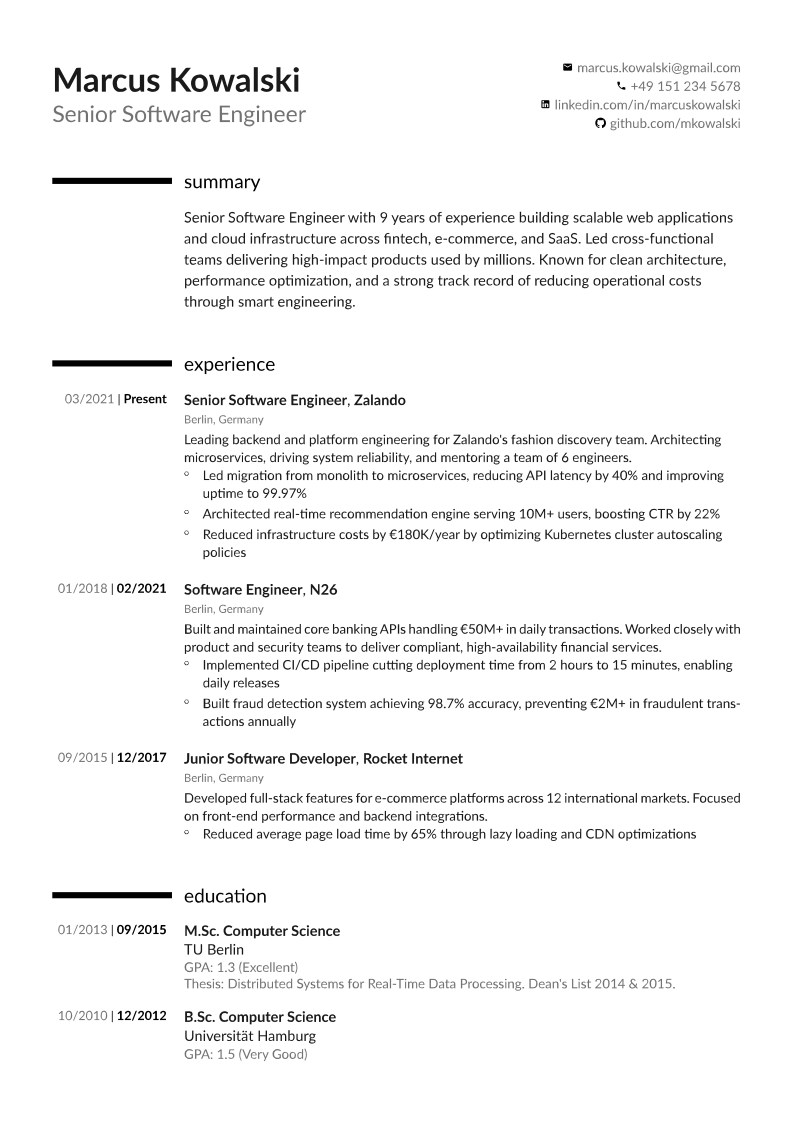
Photo is optional, and only in templates that support it. Do not add one to "look professional." Match the country, not the empty circle in the header — see Should You Put a Photo on Your Resume?. The interface is English today. Right-to-left layout is already built in; Arabic and Hebrew UI are planned, not shipped. Write the CV itself in the language the employer asked for.
A 10-minute path from blank page to PDF
You do not need a perfect CV to start. You need a file you can send tonight and tidy tomorrow. Perfection is how applications miss the closing date.
Open Simple CV and pick a template. Use Academic Chronicle if you'll spill onto two pages; use a two-column layout if certifications and languages would waste a full-width column. Fill personal info; city and country are enough for location. Skip the photo for UK NHS and most UK and Irish corporate roles.
If the profile is stalling you, write it last. Dump work history first: employer, title, dates, then three to five bullets per role. "Completed a 12-week surgical placement at Manchester Royal Infirmary and independently managed a four-bed bay under supervision" beats "gained valuable clinical experience."
Add education, then whatever the vacancy listed — mandatory training, PIN or registration, languages, certifications. If you speak more than one language, how to describe language skills matters more than labelling everything fluent. Drag sections so the first scroll hits what they asked for. For band 5 nursing, that's NMC status, placements, and training.
Download the PDF. There is no paywall on export. Fix a typo and download again. If this section has you staring, you're not alone — most people freeze on the first bullet, not on the template. That freeze is not a character flaw. It is what happens when a career has to fit into five lines.
FAQ
Do I need an account to use a free CV builder?
No. If the tool wants an email before you can type or export, it isn't free in the way you meant.
Can I download a PDF without paying?
Yes. Export is not a premium feature here. Download as many PDFs as you need.
How long should a UK or EU CV be?
Two pages is normal once you have a few years of work, or a clinical or academic record. One page is fine for a first job. Three pages is for senior academic CVs with publications. If you're deleting placements to hit one page because a US blog told you to, stop.
Should I put a photo on my CV?
Only if the country or sector expects it. UK NHS and UK corporate: usually no. Germany, France, Japan, GCC: often yes. When you're unsure, follow the photo guidance.
What if I need the CV in another language?
Write the content in that language. The builder UI is English, but the words on the CV are yours. Right-to-left support is already in the product for when Arabic and Hebrew interfaces ship.
If you've been stuck between a US resume template and a paywalled "CV maker," you already did the hard part — you have the experience. Open Simple CV, get the PDF onto your machine, and send the application.
Ready to put this into practice?
Build your CV free